
Why You Feel Tight All the Time: Holding Patterns, Postural Bracing & Foam Rolling
Have you ever wondered why your neck, shoulders, or low back always seem tight—even when you haven't injured yourself?
For years, I thought the answer was simple: stretch more, massage more, roll harder.
But after working with thousands of students (and experiencing it in my own body), I realized something surprising.
Sometimes, the tension we're trying so hard to "fix" isn't a problem to solve. It's a protective pattern our body has learned over time.
Whether it's from stress, sitting at a desk, repetitive movement, or an old injury that's long since healed, your body is incredibly good at adapting. The challenge is that sometimes those protective habits stick around long after they're needed.
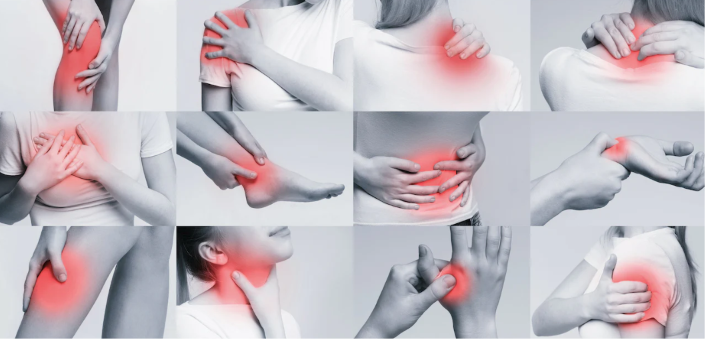
Ambiguous pain is a physical (or emotional) discomfort without a clear cause or explanation. The symptoms are vague and can be difficult to diagnose or pinpointing an exact trigger.
Why Do Your Muscles Feel Tight Even When You're Not Injured?
One way your body keeps you safe is through muscle guarding, also known as postural bracing or holding patterns.
When your brain senses stress or potential danger, it may increase muscle tension to create stability. That's a helpful response in the short term. But if that tension becomes your body's new normal, you may find yourself carrying tight shoulders, a clenched jaw, a stiff low back, or shallow breathing without even realizing it.
Research has shown that pain and stiffness aren't always caused by tissue damage. They're also influenced by your nervous system, stress levels, movement habits, and previous experiences.¹ That's why it's possible to feel tight even when nothing is actually "wrong."
What Are Holding Patterns and Postural Bracing?
Holding patterns are the unconscious ways your body learns to protect itself. Over time, these protective strategies can become your default posture.
You might notice your shoulders creeping toward your ears during a busy workday, your jaw clenching when you're concentrating, or your hips feeling stiff after hours of sitting. While these patterns begin as helpful adaptations, they can linger long after the original stressor has passed.
The body is remarkably adaptable—but comfort isn't always the same as efficiency. When these patterns persist, they can contribute to ongoing tension, restricted movement, and discomfort.
Why the Painful Spot Isn't Always the Source of Your Pain
One of the biggest misconceptions about pain is that it always starts where you feel it.
In reality, the body works as one connected system.
A stiff upper back can contribute to neck discomfort. Limited hip mobility may place more demand on the low back. Jaw tension can even play a role in headaches.
Instead of asking, "Where does it hurt?" a better question is:
"What is my body trying to protect?"
Looking at the body this way shifts the focus from fighting symptoms to understanding why they're there in the first place.
How Foam Rolling Helps Address Ambiguous Pain and Release Chronic Muscle Tension
Despite what social media sometimes suggests, foam rolling isn't about breaking up fascia or crushing stubborn knots.
Think of it as having a conversation with your nervous system.
The slow pressure and mindful movement provide sensory input that can reduce the feeling of stiffness, improve mobility, and encourage muscles to relax without forcing them.² Instead of telling your body to "let go," you're creating the conditions where it finally feels safe enough to do so.
I've seen this happen countless times in my Release Technique classes.
Students and clients often arrive feeling like they're carrying the weight of the world on their shoulders. By the end of class, they're breathing more deeply, moving more freely, and standing a little taller—not because we forced better posture, but because their bodies no longer felt the need to brace so tightly.
Sometimes the greatest change isn't becoming more flexible.
It's becoming less guarded.
A Gentle Way to Release Summer Tension and Reset Your Body
Summer has a way of quietly filling our calendars with travel, long drives, busy schedules, and late nights. Before we know it, we're carrying tension we didn't even notice building.
That's exactly why I created the Summer Live Foam Rolling Series.
Over four Tuesday evenings, we'll combine guided foam rolling and breathwork to help release deep tension, calm your nervous system, and create a weekly ritual to reconnect with your body. Each one-hour session is designed to feel nourishing—not demanding—and every class includes a replay, so a busy week never means missing your practice.
If you've been meaning to slow down and truly take care of your body, this is your invitation.
Early registration is now open. Save 10% on the entire virtual Summer Live Foam Rolling Series with code SUMMER10, and let's help your body unwind from the chaos of summer—one Tuesday evening at a time.