
Why Foam Rolling Instead of Workouts Once a Week Can Make You Stronger
What if strength, mobility, and recovery didn’t come from pushing harder but from choosing foam rolling instead of workouts once a week?
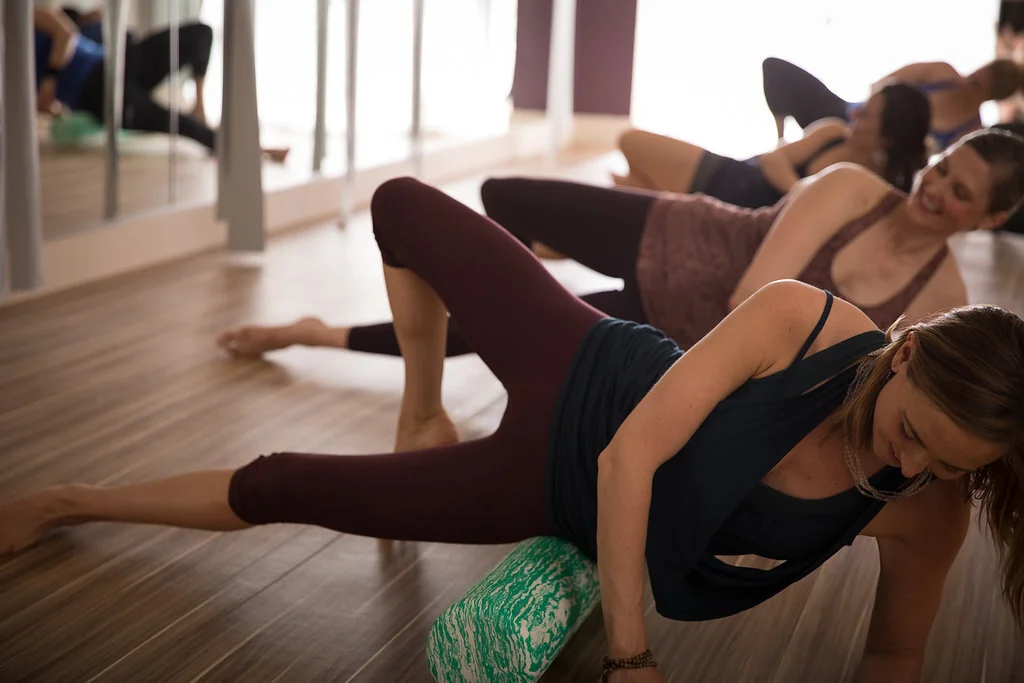
Foam Rollling Class
We’ve been taught to believe that health and strength come from effort. Sweat. Burn. Pushing through. If a workout doesn’t exhaust us, it somehow doesn’t count.
But in my work as a Fascial Stretch Therapist, I see something different every day. Many people who move regularly still feel stiff, achy, or run down. Not because they aren’t working hard enough, but because they aren’t balancing effort with recovery.
That’s where the idea of foam rolling instead of workouts comes in.
Not forever. Not instead of movement altogether. Just once a week.
When I ask clients if they foam roll between sessions, most answer with a hesitant “not really.” This isn’t about lack of discipline. We skip foam rolling because we don’t see it as valuable. We’ve been conditioned to prioritize doing over restoring.
Yet foam rolling is not a bonus. It is often the missing piece.
Foam Rolling Instead of Workouts Supports Strength and Mobility
Strength isn’t only about lifting heavier or pushing harder. It’s about how well your body supports itself in motion and in daily life.
Long hours of sitting, repetitive workouts, and stress all create tension in the fascia. Over time, tissues become less hydrated, joints lose options, and movement feels harder than it should.
This is where foam rolling for recovery and mobility becomes powerful.
Unlike stretching, which targets muscles passively, foam rolling loads and moves tissues gently. It stimulates circulation, hydrates fascia, and encourages better movement patterns. Many people notice they move more freely and feel less stiff simply because their tissues are healthier.
Is Foam Rolling a Workout? In Many Ways, Yes
One of the most common questions I hear is, is foam rolling a workout?
When done intentionally, it absolutely can be.
Foam rolling requires you to support your own body weight, balance, and coordinate breath with sensation. While one area releases, another stabilizes. This creates enough activation to maintain strength without overwhelming your system.
This is why self myofascial release for strength works so well. It supports muscle activation, joint health, and neuromuscular connection without adding more stress to your body.
A body that only pushes eventually burns out. A body that never loads weakens. Foam rolling lives in the middle, offering just enough challenge with plenty of ease.

Relaxing Foam Rolling Class
Foam Rolling Supports Mental and Nervous System Recovery
Recovery isn’t only physical. It’s neurological.
Foam rolling has been shown to help reduce stress and support parasympathetic nervous system activity. The slow compression and release of tissue sends signals of safety to the brain, helping the body shift out of constant fight-or-flight.
Many people report feeling calmer, clearer, and more grounded after rolling. This is why replacing a workout with recovery can feel surprisingly energizing.
Why Replacing One Workout With Recovery Works
If once a week you chose to replace a workout with recovery, something shifts.
You return to movement feeling stronger.
You carry less tension through your day.
You begin to feel more at home in your body.
This is the real power of choosing foam rolling instead of workouts as part of a sustainable routine.
If you want to experience this with guidance, I offer on-demand foam rolling classes from 30 to 60 minutes, as well as longer live series. With the right support, recovery becomes something you look forward to, not something you skip.
With care,
Maggie 💛